

Being a Lecture Delivered by Dr. Seidu Bello, Chief Executive Officer, Cleft and Facial Deformity Foundation (CFDF), President, Noma Practitioners Association of Nigeria.
at the 6th IADR Conference, Barcelona Hotel, Abuja, 30 September 2026
What is Noma?
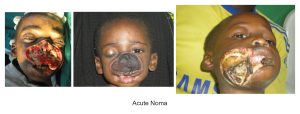
In 1595, Carolus Battus gave one of the earliest clear clinical descriptions of noma, describing the rapidly spreading destructive condition then known as “water cancer.”
In 1680, Cornelis van de Voorde introduced the term “noma” to describe this rapidly spreading orofacial gangrene. He distinguished it from cancerous growth. (“Noma” from Nomein-Greek word “To Devour”)
Noma, also known as cancrum oris, is a severe, rapidly progressive necrotizing disease affecting the oral cavity and the face.
It predominantly affects young children living in conditions of extreme poverty, malnutrition, poor hygiene and limited access to healthcare.
The disease commonly begins with an oral lesion, often involving the gingiva, and may progress rapidly to gangrene and extensive destruction of the facial tissues.
The World Health Organization recognizes noma as a neglected tropical disease. It was added to the WHO list of neglected tropical diseases in 2023.
Noma has traditionally been associated with poverty, and it has appropriately been described as “the face of poverty.”
The important point, however, is that poverty should not be regarded as the disease itself. Rather, poverty creates an environment in which malnutrition, infection, poor oral hygiene, inadequate sanitation and delayed access to healthcare interact to increase vulnerability to noma.
Noma is therefore not simply a surgical problem, it is a public-health problem.
And if it is a public-health problem, then our response must begin where public health begins: within the community and at the level of primary health care.
Noma is preventable, It is not inevitable. Where the determinants of disease are addressed, noma can disappear.
Clinically there are 2 phases of noma; Acute face and Noma survivors. Acute Noma usually affects children between 2 to 6 years and children are usually very sick with mortality ranging from 70 to 90 %; whereas noma survivors are not sick but presents with severe facial deformity, trismus, loss of tissue, difficulty eating, speech problems, difficulty breathing, psychological trauma and profound social stigma.
Where is Noma Found?
Noma is now predominantly associated with the noma belt of sub-Saharan Africa, extending across the region immediately south of the Sahara.
Nigeria is one of the countries where a substantial burden of noma has been documented.
The disease is particularly associated with northern Nigeria, although evidence shows that it is not confined to the Northwest.
Indeed, our own work has demonstrated that noma also occurs in the North-Central region of Nigeria.
What Does the Nigerian Evidence Tell Us?
In 2019, Bello and colleagues published a study on the estimated incidence and prevalence of noma in North-Central Nigeria.
The estimated incidence was 8.3 cases per 100,000 population, with substantial variation among the states studied. The study also emphasized the need for public awareness and education of primary healthcare providers in the identification of noma.
More recently, a study published in PLOS Neglected Tropical Diseases in 2025, involving Ramat Oyebunmi Braimah, John Adeoye, Seidu Bello and colleagues, examined cases managed at Noma Children’s Hospital, Sokoto, from 1999 to 2024.
The study estimated an incidence of 87.8 cases per 100,000 population in Northern Nigeria over the study period, with particularly high estimates in some states. It also demonstrated the continuing importance of noma surveillance, awareness and early detection.
It means almost 200,000 Nigerians are affected by the disease.
How much of noma has actually been integrated into primary healthcare in Nigeria?
Primary healthcare is supposed to be the level of healthcare closest to the people.
It is where health promotion takes place. It is where disease prevention begins, early diagnosis occurs, health education provided and it is where vulnerable families should first encounter the health system.
Yet oral health has historically remained largely disconnected from primary healthcare activities.
When primary healthcare is discussed, we hear about maternal and child health, immunization, malaria, tuberculosis, HIV, nutrition and other important health priorities.
But oral health is often missing.
And when oral health is mentioned, noma is even less likely to be discussed.
This must change.
Oral Health Must Become Part of Primary Healthcare
Oral health is not limited to tooth extraction or filling teeth.
Oral health includes the prevention, recognition and management of diseases affecting the mouth and surrounding structures.
This includes: Dental caries, Periodontal diseases, Oral infections, Oral cancer, Noma Orofacial trauma, Cleft lip and palate, Other congenital facial conditions and Oral manifestations of systemic diseases
Therefore, when we speak about universal health coverage, we cannot exclude the mouth: There is no complete health without oral health.
And there cannot be an effective noma-control programme without an effective oral-health component at primary healthcare level.
The Challenge of Human Resources
One of the major obstacles is the availability and deployment of appropriate oral-health personnel. At the community level, we do not necessarily need a specialist dentist in every community. What we need is a functional team.
This team should include appropriately trained:
– Dental therapists
– Dental surgery assistants
– Dental nurses
– Community health workers
– Nurses
– Community health officers
– Other primary healthcare personnel
These workers can be trained to recognize early oral disease, identify suspicious lesions, provide preventive education and initiate appropriate referral.
There is also a policy issue that requires attention.
The structure of local-government health services and schemes of service must provide appropriate positions for oral-health personnel at the primary-care level.
Historical federal schemes of service have recognized cadres such as dental therapists, dental surgery assistants, dental nurses and dental technicians.
Dental therapy is also a legally recognized profession in Nigeria, with a statutory regulatory framework.
It is surprising that the 2006 edition of Local Govt Scheme of Service recongnises several middle level health personnel but Dental Therapist, dental surgery Assistants, Dental Nurses and Dental Technologists are not recognized; it means no legal framework to employ them at the local Government level.
Therefore, our objective should be to ensure that appropriately trained oral-health personnel are actually incorporated into the workforce that serves communities.
The Role of Dental Surgery Assistants & dental Therapists
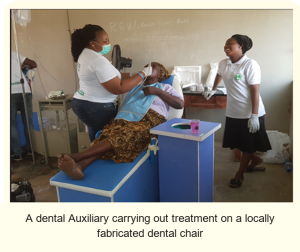
One particularly important group is the dental surgery assistant Dental Surgery Assistants & dental Therapists.
Our earlier work by Bello, Ikimi and Adedigba demonstrated the potential role of dental surgery assistants in delivering a substantial proportion of basic dental services that can appropriately be provided at community level.
This presents an opportunity.
If appropriately trained personnel can provide basic oral-health services at community level, then why should the community wait until oral disease becomes severe before the patient is referred to a tertiary hospital ? We need to move from a system based predominantly on late referral to one based on early detection and early intervention.
Community Dental Clinics at 774 Local Government Areas, as an Opportunity
Nigeria has 774 local government areas. Imagine a situation in which every local government area has access to a functional community dental/oral-health service.
It does not necessarily mean that every facility must have a specialist maxillofacial surgeon. Instead, it means that every community should have access to:
1. Oral-health education.
2. Basic preventive services.
3. Early recognition of oral disease.
4. Recognition of early noma.
5. Nutritional and hygiene education.
6. Community surveillance.
7. Appropriate referral.
8. Follow-up of patients after referral.
This would fundamentally change our approach to noma and oral diseases..
How Would Integration Work?
I propose a simple 3-level model.
LEVEL 1 — COMMUNITY
The first level is the community. Community health workers, religious leaders, teachers, traditional leaders and other community actors should be taught to recognize the early warning signs. The message should be simple: “A child with an ulcer, swelling or abnormal lesion in the mouth—particularly a malnourished child—should not be ignored.”
LEVEL 2 — PRIMARY HEALTHCARE CENTRE/ COMMUNITY DENTAL CLINIC
Appropriately trained dental trained officers will be employed at the Community Dental Clinics, and the child should be assessed at this facility.
Healthcare workers should be trained to identify:
– Gingival ulceration
– Acute necrotizing gingivitis
– Facial swelling
– Oral ulceration
– Foul-smelling oral lesions
– Rapidly progressing facial tissue destruction
– Malnutrition
– Associated systemic illness
Where noma or any oral health disease is suspected, treatment and referral should begin immediately. A community dental clinic should provide preventive and basic oral healthcare. This facility can also serve as the surveillance point for noma and other oral diseases. Every suspicious case should be documented. Every confirmed case should be referred and tracked appropriately.
LEVEL 3 — SECONDARY/ SPECIALIST / TERTIARY CENTRE
Patients requiring specialist management should then be referred to appropriate tertiary or specialist centres. This may include: Maxillofacial surgeons, Oral and maxillofacial pathologists, Plastic surgeons, Paediatricians, Nutritionists, Anaesthetists, Physiotherapists, Speech and language specialists, Psychologists, Other relevant specialists. The tertiary centre should also support training, research and rehabilitation.
In Summary, Effective Community Dental Clinics will be able to coordinate Early Detection, Surveillance, clear Referral Pathway and Integration of Nutrition into noma. This will be a baseline ingredient for other aspects of noma management including Training of Personnels and Rehabilitation of Survivors at tertiary centres.
In conclusion,
Noma is not merely a disease of the face. It is a disease that reflects the conditions in which a child lives. It reflects poverty, malnutrition, poor hygiene and sanitation, inadequate access to healthcare and importantly, it reflects the failure of health systems to detect disease early.
A child should not have to travel hundreds of kilometres before somebody recognizes that an oral lesion is dangerous. A child should not have to wait until the face has been destroyed before receiving treatment. And a child should not have to become a lifelong survivor of a disease that is preventable and treatable when detected early.
The answer is therefore not to build only more tertiary hospitals. The answer is to strengthen the community health system. Let us bring oral health into primary healthcare. Let us bring noma into primary healthcare. Let us train our community health workers. Let us empower our dental therapists and dental surgery assistants. Let us establish functional community dental clinics. Let us strengthen surveillance.
Let us create effective referral pathways. And let us ensure that every child at risk of noma can be identified and treated before irreversible facial destruction occurs.
Noma should no longer be a disease that we discover when the face has already been destroyed. We must find it in the community, treat it early, prevent its progression and save the face—and the life—of the child.
Thank you very much.
Dr. Seidu Bello
Chief Executive Officer, Cleft and Facial Deformity Foundation,
President, Noma Practitioners Association of Nigeria